
Why Your Shipment to Nigeria Might Get Stuck at Customs (And How to Make Sure It Doesn't)
Why Your Shipment to Nigeria Might Get Stuck at Customs (And How to Make Sure It Doesn't)
Picture this: your shipment lands in Nigeria right on schedule. Then it just... sits there. Not because anything went wrong with the shipping itself, but because one document didn't match, a value looked off, or an approval nobody planned for suddenly became necessary.
It's one of the most frustrating ways for a shipment to stall, and it's almost always preventable. Whether you're sending personal belongings, running a business that imports goods, or shipping a vehicle from the U.S. to Nigeria, understanding how customs clearance actually works can save you time, money, and a lot of back-and-forth.
Customs Clearance Isn't Just a Final Checkpoint
It's tempting to think of customs as one last hurdle at the end of the shipping process. In reality, it's a process that starts long before your cargo ever leaves the U.S.
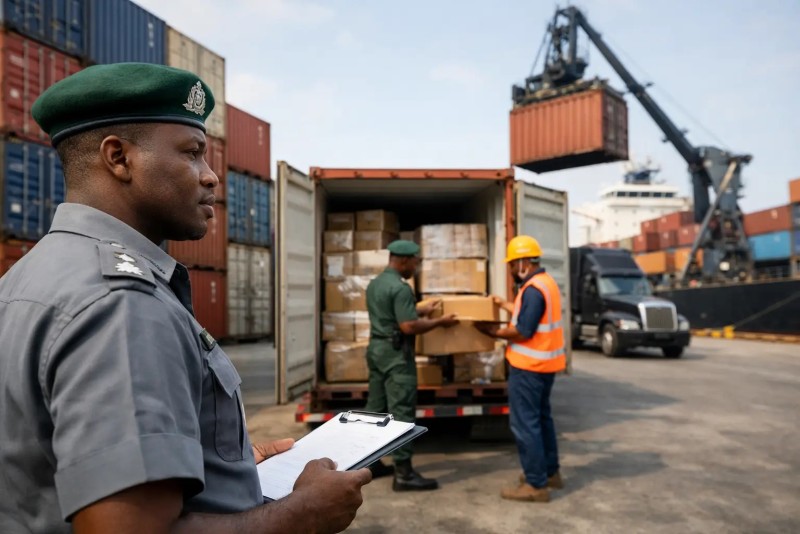
At its core, clearance is how the Nigeria Customs Service confirms what's coming into the country, where it originated, what it's worth, and whether it's allowed in at all. For commercial shipments, that review often pulls in banks, licensed customs agents, terminal operators, and sometimes additional government agencies.
And the amount you'll owe isn't just tied to what you paid for shipping. Customs calculates charges based on the classification of your goods, their declared value, freight and insurance costs, exchange rates, and applicable duties, levies, VAT, or surcharges. That's why two shipments that look similar in size can end up with very different final costs.
If you're sending household items or gifts to family, the process is generally lighter than a full commercial import — but it's not automatic. A box labeled simply "personal effects," with no real detail behind it, can still raise questions and cause delays.
Get Your Paperwork Airtight Before You Ship
If there's one thing that determines whether your shipment clears smoothly or gets held up, it's this: your paperwork has to match your cargo, exactly.
Customs officers need to know precisely what's inside a shipment, who sent it, who's receiving it, and what it's worth. For most shipments heading from the U.S. to Nigeria, that typically means:
- A commercial invoice or value declaration
- A detailed packing list
- Contact information for both shipper and consignee
- The transport document from your carrier — an air waybill for air cargo, a bill of lading for ocean freight
Here's where a lot of people trip up: vague descriptions. Writing "miscellaneous items," "goods," or "parts" on an invoice tells customs officers nothing useful. Instead, be specific. "10 new men's cotton shirts" works. "Used household kitchenware" works. "One used 2018 Toyota Camry" works. "Clothes," "home items," or "car" do not.
If you're importing for a business, be prepared for additional requirements depending on what you're shipping and its value — things like a Form M, a Pre-Arrival Assessment Report, product certificates, or other permits. These requirements shift depending on the goods involved, so confirm what applies to your shipment before it leaves, not after it's already sitting in Nigeria.
Some Goods Need More Than a Customs Stamp
Food, cosmetics, medications, medical devices, chemicals, plants, animal products, electronics, and certain industrial goods often require sign-off from agencies beyond customs itself — think NAFDAC or SON. That might mean registrations, certificates, or inspections specific to the product.
None of this means you can't ship these items. It means you shouldn't assume they'll move through the process the same way a box of clothing would. If you're a small business bringing in beauty products, for instance, check the requirements for your exact products, labeling, and quantities well before you book the shipment.
Don't Undervalue Your Shipment — It Almost Never Pays Off
It's tempting to lower the declared value on an invoice to shrink your customs bill. Resist that urge. When customs suspects a value is too low, they can ask for proof, reassess the shipment themselves, hold it for inspection, or apply penalties — all of which cost more time and money than you would have saved.
The safest approach: use the real purchase price for new items, backed up by receipts or supplier invoices where possible. For used personal belongings, give a fair current value and note that they're used. And resist the temptation to call a large shipment a "gift" just because it's headed to family — ten identical boxes of new products reads as inventory to customs, and they'll likely treat it that way.
It also helps to loop in your receiver ahead of time. Let them know what's coming and its declared value before the shipment departs, so nobody's caught off guard by unexpected charges.
What You'll Actually Pay
There's no flat customs fee that applies to every shipment. Your final cost depends on your product's classification and how customs values it. Duty rates vary by Harmonized System (HS) code, and other government charges may apply on top of that.
For ocean and commercial shipments, you might also see charges for terminal handling, documentation, examination, storage, demurrage, delivery, and agent services. Not every shipment hits every one of these — but delays can make costs climb fast. Storage and demurrage fees are particularly brutal because they keep accumulating for as long as a document problem stays unresolved.
Vehicles come with their own set of rules. Age, type, value, and shipping method (RoRo vs. container) all affect eligibility and cost. Before you commit to a shipping method for a car, make sure the vehicle's title, purchase records, and details line up consistently across every document.
A good freight partner can walk you through likely costs and paperwork requirements — but be wary of anyone who promises an exact customs outcome before officials have even assessed your shipment. Classifications, inspections, and policy changes can shift the final number.
Pick a Shipping Partner That Keeps You in the Loop
Customs clearance feels a lot more manageable when you actually know what's happening with your shipment. Tracking, realistic timelines, and responsive support aren't nice extras — they're how you manage risk.
Before you commit to a shipping company, ask how they'll keep you updated, what documents they'll need from you, who handles clearance on the Nigeria side, and exactly what's included (or not) in your quoted rate. A cheap freight quote isn't actually cheap if it comes bundled with poor communication and surprise fees once your cargo lands.
The Usual Suspects Behind Clearance Delays
Most delays trace back to small, avoidable mistakes:
- Mismatched documents. If your invoice, packing list, and actual cargo tell three different stories, expect extra scrutiny.
- Bad consignee info. Use the receiver's full legal name, a working Nigerian phone number, and accurate delivery details. If customs or an agent can't reach the consignee for clarification, your shipment sits.
- Restricted goods without permits, undervaluation, or late payment of assessed charges.
- Physical inspections. These aren't automatically a red flag, but incomplete paperwork makes them slower and more complicated than they need to be.
How to Stack the Odds in Your Favor
A few habits go a long way toward keeping your shipment moving:
- Build one complete document folder — invoices, receipts, packing lists, ID or business records, transport documents, and any approvals for regulated goods. Then go line by line and check that your descriptions match what's actually packed.
- Prep your receiver. Give them a realistic arrival window, a heads-up on possible customs charges, and a reminder to answer calls and messages promptly. If a customs agent will be involved on their end, get that arranged ahead of time.
- Build in time. Don't schedule inventory to arrive the week before a big launch, and don't assume a fixed personal deadline lines up with customs processing. Air freight moves faster than ocean freight, but neither skips the requirements — the right choice depends on your budget, your cargo, your deadline, and how much delay you can tolerate.
The Bottom Line
Customs clearance shouldn't feel like a gamble or a last-minute surprise expense. Build it into your shipping plan from day one: identify your goods accurately, gather your supporting documents, ask about destination requirements up front, and work with a provider that actually communicates.
When your paperwork is honest, your receiver knows what to expect, and your shipment is in the hands of people who understand the process, you give it the best possible shot at moving from the U.S. to Nigeria without unnecessary headaches. That peace of mind starts well before your cargo ever reaches the border.
Related Articles
Shipping From Dallas to Nigeria: What Actually Makes the Difference
Getting a shipment from Dallas to Nigeria isn't the hard...
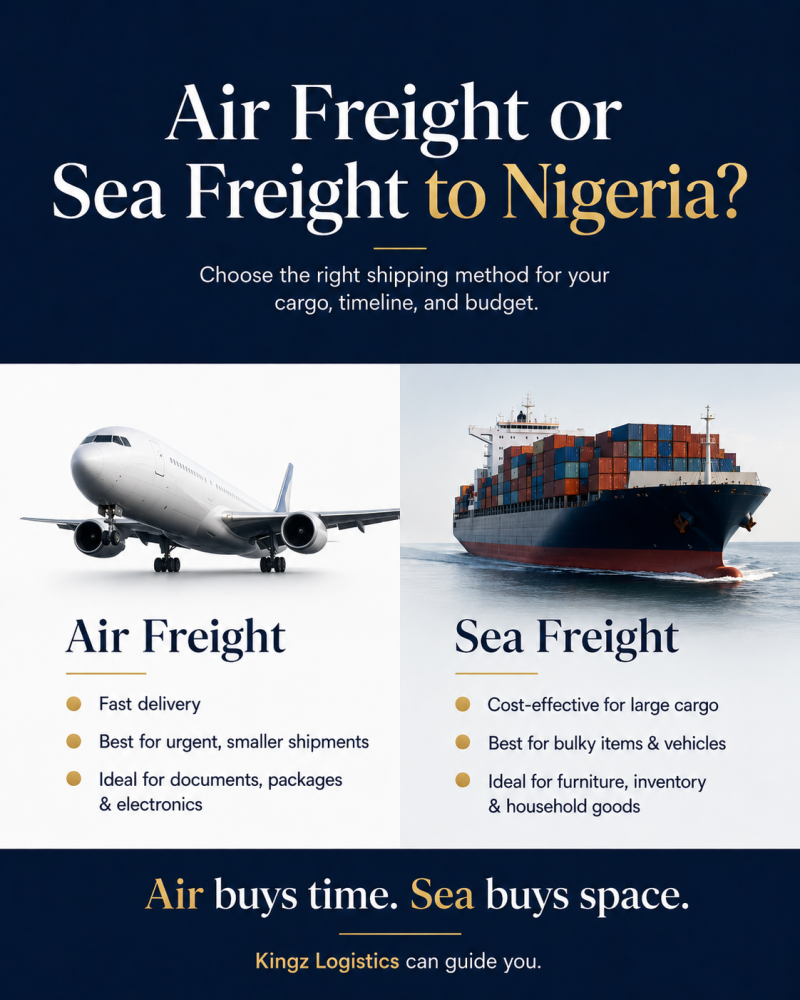
Air Freight or Sea Freight to Nigeria?
Air Freight vs. Sea Freight to Nigeria: Which Should You...
How Much Does It Cost to Ship From USA to Nigeria?
Shipping From USA to Nigeria Cost GuideThe cost of...

Four things your freight partner should never make you feel
Most people don’t leave their freight partner because...

Top 10 American Products Nigerians Love to Import
Whether you're in Lagos, Abuja, Port Harcourt, or...
8 Shipping Best Practices You Should Never Ignore
A Guide for Shipping from the USA to...