
Air Freight or Sea Freight to Nigeria?
Air Freight vs. Sea Freight to Nigeria: Which Should You Choose?
A family member needs a gift in Lagos before a wedding next week. A business owner has pallets of inventory ready in Houston. A car buyer needs a vehicle shipped to Nigeria. All three shipments are headed to the same country — but they shouldn't all travel the same way.
Choosing between air and sea freight comes down to four factors: speed, budget, shipment size, and how much control you need over timing. Get it wrong, and it's costly either way — air freight on a large, non-urgent shipment can strain your budget, while sea freight on a time-sensitive item can leave you waiting weeks longer than expected.
The Real Difference
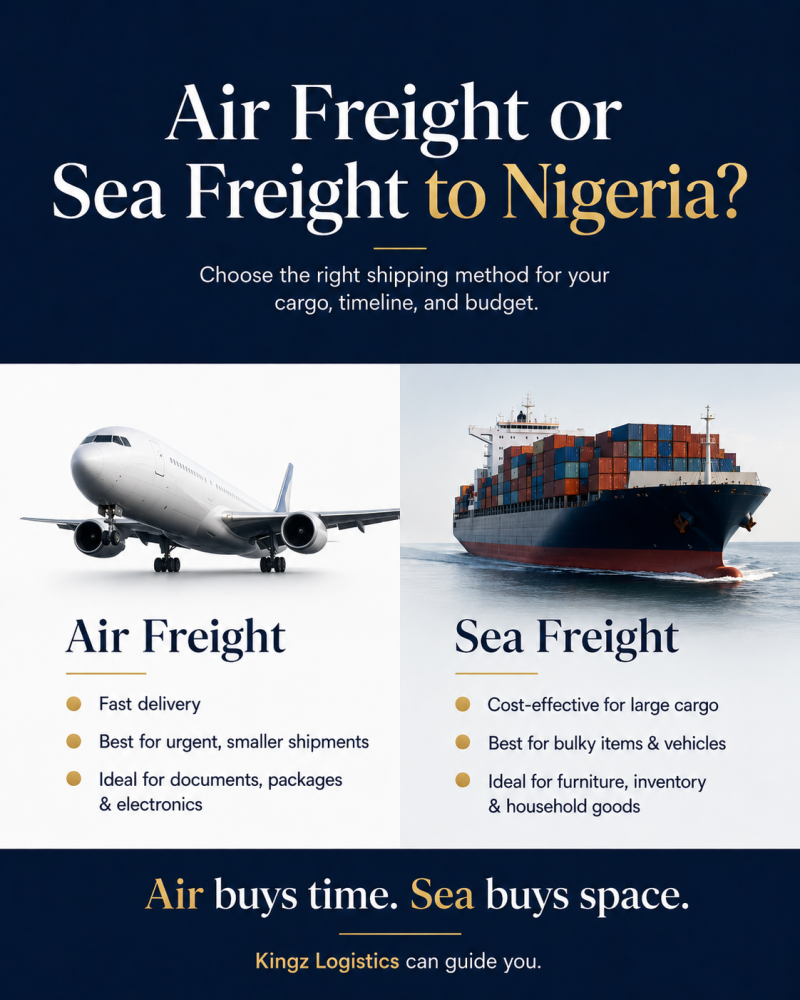
Air freight moves cargo by aircraft and is built for speed. It suits documents, personal packages, samples, electronics, and smaller business orders. Transit windows are far shorter than by sea, though customs and local handling still affect final delivery.
Sea freight moves cargo by vessel, either in a shared or dedicated container. It's the practical choice for bigger, heavier shipments — household moves, commercial inventory, machinery, and vehicles. RoRo (Roll-on/Roll-off) shipping is a sea-based option specifically for operable vehicles.
Neither is universally better: air freight buys time, sea freight buys space at a lower cost. The right choice fits your cargo, not just your budget or your deadline in isolation.
When Air Freight Is Worth It
Air freight is typically priced by chargeable weight — a combination of actual weight and the space a package occupies. A light but bulky box can cost more than expected, so confirm dimensions, not just weight, before booking.
It's worth the premium when:
- Replacement parts or supplies are needed to keep a business running
- Product samples are tied to a buyer's timeline
- Personal items are needed for a fixed date (like a wedding)
- Shipment volume is too small to justify waiting for ocean freight
Speed doesn't excuse loose paperwork, though. Accurate item descriptions, values, and documentation matter for every shipment, regardless of mode — poor paperwork causes delays no matter how fast the cargo travels.
When Sea Freight Makes More Sense
Sea freight is built for volume. Moving many cartons, furniture, equipment, or a vehicle by ocean can significantly lower the cost per item, provided you can absorb the longer transit time.
- Less-than-container-load (LCL) service is ideal when your goods don't fill a full container — you share space with other cargo on the same route.
- Full container load (FCL) suits larger shipments, gives more control over loading, and works well for household relocations or established import businesses.
The trade-off is patience: port operations, customs, and inland delivery all affect the final arrival date. Build in extra time, especially around store launches, holidays, or family events — sea freight is affordable because it isn't rushed, so don't treat it as a last-minute fix.
Cost Is More Than the Freight Rate
A low advertised rate doesn't guarantee a low final cost. Before booking, ask what's included — pickup, packing, documentation, customs handling, storage, and delivery can all carry separate charges. For vehicles, confirm required documents and whether you're quoted for RoRo or containerized shipping.
Also factor in the cost of risk. Fragile or high-value goods need proper packaging and handling — a cheap route isn't a bargain if damage or poor communication costs you more later. Reliable tracking and responsive support are part of what you're paying for.
Timing, Tracking, and Customs
Transit time is only part of the journey — cargo still needs to be received, documented, loaded, cleared, and delivered. Air freight is generally faster overall, but customs reviews can still hold things up. Sea freight requires more advance planning and is more exposed to vessel schedules and port congestion.
In both cases, incomplete paperwork or inaccurate descriptions can slow things down. Choose a provider that gives clear, proactive tracking so you always know where your shipment stands.
How to Decide
- Start with your deadline. If missing it creates a real problem, choose air. If your goods can wait, sea freight saves money at scale.
- Consider size and nature. Small, valuable, or urgent items suit air. Large, heavy, or bulky shipments — including vehicles — belong on the ocean.
- Look at total cost, not just the quoted rate — packaging, handling, customs, and delivery all add up.
- Prepare early. Pack securely, label clearly, and provide complete documentation regardless of which mode you choose.
Kingz International Logistics helps customers shipping between the U.S. and Nigeria make this call — with clear communication, dependable handling, and tracking from booking to delivery. Give urgent items the speed they need, give large shipments the space they deserve, and give every shipment enough planning time to arrive with confidence.
Related Articles
Shipping From Dallas to Nigeria: What Actually Makes the Difference
Getting a shipment from Dallas to Nigeria isn't the hard...
Why Your Shipment to Nigeria Might Get Stuck at Customs (And How to Make Sure It Doesn't)
Why Your Shipment to Nigeria Might Get Stuck at Customs...
How Much Does It Cost to Ship From USA to Nigeria?
Shipping From USA to Nigeria Cost GuideThe cost of...
Four things your freight partner should never make you feel
Most people don’t leave their freight partner because...

Top 10 American Products Nigerians Love to Import
Whether you're in Lagos, Abuja, Port Harcourt, or...
8 Shipping Best Practices You Should Never Ignore
A Guide for Shipping from the USA to...